Crowned In Silence

“The sky is clear again,”

Said the victor, eyes fixed on the horizon.

He did not dare to look down.

The earth had turned red.

“Long live the emperor,”

The soldiers roared.

But their triumph thinned in the wind,

Drowned by an old woman’s cry

Over a body that would not rise.

“We have won. The king has surrendered.”

The decree unfurled in gold.

Another border erased.

Another seal pressed warm into wax.

The people were never the enemy.

Nor was the king.

They only crossed invisible lines,

lines drawn by pride and power.

Homes burned on both sides.

His banners flew higher.

They did not choose this war.

He chose not to care.

It happened before; it’ll happen again.

The board is set.

Kings advance, collide, and are taken.

Pawns fall without a name.

“What a victory,” he thought.

If only he could say it to their faces.

He climbed into his wagon.

The wind did not cheer the victor.

It whispered softer.

Loser.

Borrowed Sleep: A Dream Catcher Story

Dreams are my friend. They always have been. They have been an escape from the pain of reality. I have lived a thousand lives there, and absolutely none in the real world. I look forward to the darkness of the night; the days are hell for me. Sleep wasn’t rest. It was continuity.

Today was one such day. I kept remembering her. I could almost hear her voice. It has been more than fifteen years since I was the most important thing in her life. As for me, she is still the most important thing. It has been eons for her, but not another second for me. She had lived a life. I had been waiting inside the memory of one.

The thoughts kept me company as I waited for the darkness to arrive, waiting for it to engulf me. Time went on, and I lay still on my bed, eyes glued to the ceiling, looking at nothing.

I looked at my phone, stalking her Instagram profile again. This had become another routine of mine before going to the abyss. I saw a notification.

“This is something I have not seen in a long time,” I wondered.

It was a text from Nandini. I could not believe my eyes. This could not be real.

“Hi Tejas,” it read.

I looked at the screen for what felt like an eternity.

“Hi. How are you? Do you still remember me?”

“Of course. I will never forget you.”

“Are you okay, Nandu? This is very unusual for you.”

“Tejas! I want you to meet me. I have something to tell you.”

I swallowed my own saliva as I read it.

“WHY ARE YOU STILL AT YOUR PHONE AT THIS POINT IN TIME?” my mother’s voice roared from behind.

“I am not fifteen anymore, ma,” I shouted back.

“Go back to sleep. It’s not good for your health. You don’t take care of yourself already.”

I ignored her and kept staring at the screen. I had forgotten to reply in this moment of harakiri.

“Where do you want to meet?” I typed.

There were no more texts.

I cursed my mother in anger and went to my room. My father was already sleeping there.

“Why does he have to hijack my room now?” I groaned.

I went to the second room. Mother was lying there. Feeling tired, I lay beside her, but this time my friend evaded me. I kept looking at the ceiling again.

Something felt wrong.

“I was already in this room before. How did I go to the drawing room? And why didn’t my parents talk about my messy apartment?”

The bulb switched on in my brain.

This was a dream.

My parents don’t live with me. I never got a text. Life is still the same. My friend tricked me today.

“Mom! I know it’s a dream.”

There was panic in her eyes.

“What are you saying? You are tired. Let me take care of you.”

She placed her hands on my head. Frustration crept in. I tried to slap her hands away.

I couldn’t move.

I was frozen.

“Not the fucking sleep paralysis again,” I cursed in my head.

The struggle continued. I just had to move my body a little, and this would be over. The weird thing was, I could still speak.

“Just go away, Mom. Let me lie here in peace.”

“Shut the fuck up and sleep,” she cursed.

My parents have never used any curse words in their lives.

This was the threshold.

I forced myself with all my strength one last time and slapped her hand away. She cried.

I woke up.

There was a messy pile of clothes where my mother had been sleeping. I sighed. I stepped outside. I went to the other room. My father was not there, of course.

Crestfallen, I checked my phone.

“Meet me at the park near our school.”

I jumped in elation.

Nandini had replied.

That was not a dream.

But this couldn’t be real. It just could not be.

Fifteen years. I had waited hopelessly, and one day, out of the blue, this happened.

“Meow.”

A cat sat on the balcony.

I stared at it. How did it come here?

This was too much to process. I needed air. I unlocked the door. A kid stood there, frozen. He saw me and ran away. I followed him. He went into his apartment. Shocked, I went in after him.

“Please go back. My boy is getting scared,” the lady said.

“What happened? Why is he scared of me?”

“You have been shouting for the past hour. He woke up because of it and couldn’t go back to sleep.”

This was unusual. I don’t usually speak in my dreams.

“I can explain,” I said. “I was dreaming. I had sleep paralysis. I might have been speaking. There’s no need to worry.”

She looked at me carefully.

“You look troubled, son. It is tough living alone. Please feel free to come to my house if you are facing any difficulties.”

We talked for some time. She told me about her family. I thanked her and walked back. The kid stared at me, curious now. We spoke about exchanging numbers. I had forgotten my phone.

I went back to get it.

I rechecked the messages.

There was no text from Nandini.

I refreshed. Again and again.

The last text was one I had sent years ago. Unanswered.

This was still a dream.

My friend had been mocking me.

I was back on my bed, unable to move. I shouted.

“WHY? WHY ME? CAN’T I HAVE SOME PEACE HERE?”

I forced myself to wake up.

I succeeded.

I was drenched in sweat. I stumbled to the mirror. The right half of my face was white. Skin peeled off as I forced myself out of the glue. I collapsed onto the floor.

My phone rang.

“Hey! It’s Asha, your neighbour. You didn’t call back.”

What?

I hadn’t given her my number.

I looked at the bed.

There I was. Lying. Still.

Probably fighting with myself to wake up.

I moved my finger.

My eyes opened.

The room was silent. Clothes lay scattered. No cat. No voices. I stepped into the hallway. Her apartment door was shut. No sound.

I had finally woken up. Sleep, it seemed, had thinner walls than I thought.

It had been the weirdest dream I had ever had. The meta layers within dreams had shaken me. Maybe dreams were not the best of friends. They offer escape, but they can torment exceedingly well. They know the deepest and darkest of our secrets.

In the morning, I left my home.

As I entered the lift, she was there.

“Asha,” she said. “I know we haven’t spoken before. But I had the weirdest dream last night. You were shouting. My kid got scared. You came to my place, and we talked. Is everything okay?”

I stared at her.

“It’s just dreams,” I said finally. “We can’t explain them.”

She smiled. The lift doors opened. We went our ways.

How did this happen? Did I influence her dreams? Was this a coincidence?

I checked my phone.

No text from Nandini.

But I wasn’t worried about that anymore. For the first time, waking felt optional.

If someone in the universe had been observing me, they would have seen me smile for the first time in fifteen years.

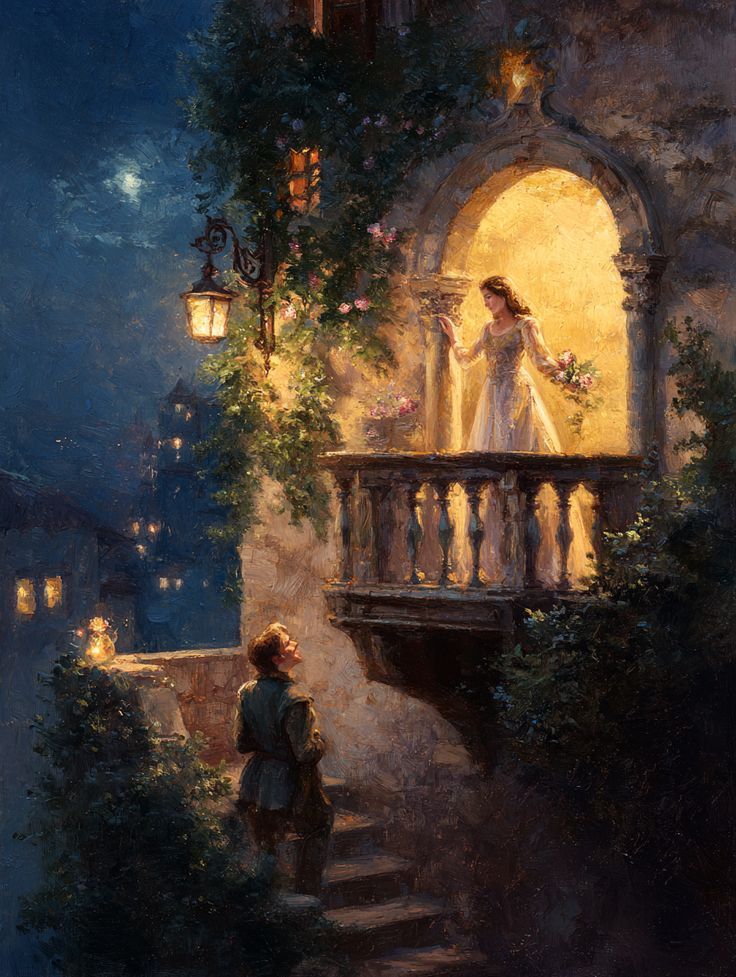
The Ending We Already Knew

It was one of those days
the sky didn’t bother to explain
when balconies caught a smile,
soft, like a secret
resting on his lips,
and love flickered in her eyes
as if the world had never broken.

But down below,
behind half-closed doors,
the air burned bitter.
Anger moved in heavy footsteps.
Hate breathed where hope once slept.

Still
the dreams had come together,
bloomed like spring after silence,
fought for space
in a world too narrow for both.
And then, quietly,
they vanished.

They had believed
in change,
in love,
in rewriting fate.

But time turned its page,
and there they were again
Romeo and Juliet,
trapped in the same play
with new clothes,
the same ending.

Until The Next Sleep

The good part of the day was over. Five pure hours of unconscious bliss, gone in an instant. The bed still felt warm, but he felt cold as he came back to the real world. He forced himself to go back, but it was a futile effort. The ceiling fan spun slowly above him. Its sound was neither comforting nor disturbing. It was simply there.

His eyes opened. The curtains leaked pale light into the room. It was morning. Morning meant only one thing. He had to get ready. His body rose, slow and unwilling, as if dragged upward by invisible strings. The tiles were cold under his feet. He moved because he had to. He always had to.

He didn’t like going to the office. As a matter of fact, he didn’t like coming back from the office either. The only exciting moments in his existence came in the world of dreams. It was rather unfortunate that he couldn’t sleep for all 24 hours.

The mirror reflected him back without care. The same tired eyes. The same faint shadows under them. He brushed his teeth. He washed his face. He buttoned his shirt with fingers that remembered the sequence better than his mind did. He wore shoes that had long since lost their shine. They carried the weight of countless mornings like this one.

At the office, the air was still, the lights too bright. PPTs waited for him. A computer hummed to life. He sat. Hours began to slip past; he felt all of them and none of them. He started working, doing the same thing he had done yesterday and would do tomorrow. Slides filled the screen. Numbers, charts, bullet points. They stacked on top of each other until they blurred together. Conversations drifted in the background, words without shape.

Lunch arrived. A plate of food that carried no taste. He chewed, swallowed, finished, and returned. The hours stretched again, quiet and heavy. The clock ticked only forward, never back.

Evening came. People packed their bags. They spoke of home, of family, of plans. He stayed for a while, letting the room empty out before him. He took his bag, rose, and walked back along the same path as always.

The city under evening lights was no different from the city in the morning. The same roads, the same shops, the same wires hanging low. He walked past them with steady steps, shoes scraping the pavement, carrying him without thought. Crowds thinned as he reached the quieter lanes. The sound of traffic faded to a distant hum.

His room waited in silence. He dropped his bag on the floor. He sat for a while, staring at nothing. Time moved, but he did not. Eventually, he lay down. The mattress knew him well. The ceiling disappeared as his eyelids closed. Slowly, gently, the noise of the world grew distant. The edges of everything softened. His breath slowed. He was gone.

For a few hours, there was peace again.

The Beauty of Overrated Experiences

“Hey! You went to Venice, right? How was it?”
“It was good, but it’s overrated now. Everybody goes there. It has lost its beauty.”

We hear such sentences often. For some time now, places, movies, songs, books, and even food have been given a new adjective: overrated. Why is this the case? The same places and things that once inspired art, literature, and culture often fail to impress people today. Perhaps the problem is not with the place or the art, but with our expectations. The more we chase uniqueness, the harder it becomes to feel wonder in what has already been loved by millions. I am not going to diagnose this fully, because that would require deep research into human behaviour. What I will share here are my own experiences with “overrated” things.

When I arrived in Chennai, the one place I wanted to visit was Marina Beach. I was told it is overrated and that there are other, smaller but cleaner beaches. Regardless, I went there. There was some truth in what I had been told; the beach was not very clean. Yet, when I walked up to the shore, I heard laughter. Families were ending their day on a joyous note. Children were playing and running through the shallow receding water. Couples were holding hands and looking out at the vastness of the sea. People from all strata of society were enjoying their well-earned evening together.

In that moment, I forgot about taking the perfect photos and simply absorbed the happiness and serenity around me. The smell of corn, the sight of kites flying high, and the chatter of vendors selling snacks all added to the atmosphere. It was not about the beach alone, but about the life it contained.

I have been to cleaner and less crowded beaches, but the emotions are not the same. At a secluded beach, you can be with yourself. At Marina, filled with people and emotions, you become one with the surroundings. Sometimes beauty is not in the landscape, but in the shared experience of being human together.

I feel we have always been focused on finding something better. In the pursuit of the new, we often overlook the value of what is already good. There is a sense of achievement in discovering something unearthed, but how do we measure its goodness? By calling it better than the “popular good” that already exists. What happens when we find another new good thing? The cycle repeats. The better becomes the new good, and the good becomes overrated.

There is also a certain pride in holding a contrarian view. To say “I did not like it” often feels like a mark of refinement, as though our taste is sharper than the crowd’s. However, in doing so, we sometimes overlook the deeper truth: the very fact that something is popular means it has touched the hearts of countless people. There is an art in overrated things. They have reached out to the vast majority, connected with many, and given people a sense of belonging.

It is a blissful day for me if I listen to Arijit Singh, eat at a popular city joint, and spend the evening among the crowd, blending in with them. These places and experiences have witnessed countless stories, and I feel proud when I contribute my own to them. The crowded restaurant has heard laughter and arguments, the beach has seen first loves and last goodbyes, and the song has healed thousands in ways words cannot describe. To add my thread to this fabric feels meaningful.

I look forward to doing the things that many others have done, because that is how I become a part of this beautiful society. One day, I will take the road less travelled, but I will never forget the crowded paths that brought me there. After all, even the most unique journeys often begin on the very roads that millions have already walked.

The Person I Ignored

Sumit was running late for work and silently cursed the late-night party as he hurriedly tied his shoes. He picked up the half-smoked cigarette from the ashtray and lit it again. There were still a few minutes before the autorickshaw was supposed to arrive, but he anxiously kept checking the Uber app, hoping it would get there sooner. He liked to think his friends had dragged him to the party last night, though deep down, he knew he hadn’t resisted much: “I can’t, yaar. I’ve got meetings tomorrow.” Saying no was hard; what if they stopped inviting him?

“Sunil bhaiya, don’t bring the tea now, I’m already running late. Make sure to come on time tomorrow.”

The blaring horn of an autorickshaw snapped him out of his thoughts. He stepped outside and climbed into the three-wheeler.

“Bhaiya, 7312,” he told the driver, giving him the Uber OTP. Greetings were reserved for his colleagues and seniors.

“Bhaiya, wrong OTP. Please check again,” the driver said. Sumit looked at his phone, and the OTP was correct. Frustrated, he asked the driver to try again, but the result was the same. Irritated, he insisted the driver enter the code one more time. As Sumit watched him type it in, he suddenly realized he had gotten into the wrong autorickshaw.

“Come on, bhaiya! Why didn’t you tell me you were waiting for a different passenger?” he exclaimed, stepping out of the rickshaw without bothering to hear a reply. Just a few feet away, another rickshaw was parked. He checked the number plate and climbed in.

“7312”

Sumit asked the driver to stop at the tea shop near his office. He paid the fare and stepped out of the vehicle.

“Bhaiya, a cup of tea,” he called out to the shopkeeper while lighting his cigarette. As he did, he noticed the shopkeeper shooing away a beggar, as usual. The beggar was a familiar figure in the area, showing up at the shop multiple times daily to ask for money. Sometimes, the shopkeeper would give him something, while the beggar was met with harsh words at other times. Sumit never gave much thought to the man.

Following his usual routine, he finished his tea, took the last puff of his cigarette, and then pulled out a 5-rupee coin, handing it to the beggar. He glanced around, satisfied that there were witnesses to his small act of generosity. Just then, his phone rang.

“Pranaam, Maa! I’ll call you later, I’m running late for work,” he said, heading toward his office. Behind him, the beggar picked up Sumit’s discarded cigarette butt and tossed it into the dustbin.

Sumit’s days fell back into their usual rhythm, which mostly involved juggling meetings, rushing through presentations, and finding a few seconds in between for a smoke. Every morning, he’d stop at the same tea stall for his “one tea and one cigarette,” sometimes glancing at the beggar hovering near the shop. Time and again, he noticed the beggar picking up discarded cigarette butts, his own and those left behind by other customers, and carefully tossing them into the dustbin. It was odd, but Sumit never bothered to ask why. It was just another eccentricity of the city, he told himself.

Days rolled on, and Sumit found himself in a sour mood one afternoon. He had just come out of a heated meeting where his boss had berated him for being late on deadlines and “not pulling his weight.” The boss had chastised Sumit before the entire team to make matters worse. Frustration and a bruised ego tugged at him as he stormed out of the office.

He reached the tea stall, craving a smoke to calm his nerves. The beggar was there, collecting yet another used cigarette butt from the ground.

“Bhaiya, tea, and a cig,” Sumit ordered the shopkeeper, his tone sharper than usual. The shopkeeper handed him his usual tea, and Sumit lit his cigarette with an irritated flick of the lighter.

The beggar hovered close, eyes darting between Sumit’s face and the cigarette in his hand. Something about his presence set Sumit off, maybe it was the memory of his boss’s scolding, or perhaps it was just the cumulative stress.

“What do you want?” Sumit snapped, glaring at the beggar. “Don’t you have anything better to do than pick up these cigarette butts?”
The beggar still crouched down, mumbled, “I was just like you.”

“Just like me?” Sumit spat, exhaling smoke in frustration. “What’s that supposed to mean?”
But the man only offered a faint, haunted look, resumed his cigarette-butt-collecting routine, and drifted away, leaving Sumit with more questions than answers.

Sumit turned back to his tea, the warmth of the drink failing to soothe his temper. The shopkeeper finally broke the silence.

“Leave him alone, Sumit bhai,” the shopkeeper spoke, his gaze laced with a quiet sadness as he looked at the beggar. “He has lost everything in the world.” Sumit shrugged, still annoyed but curious. “Why, what happened to him?”

The shopkeeper pulled out a small stool and wiped his forehead with a towel. “His name is Raman. He used to be an accountant. He worked in the office at the corner of the street. He was married and had a daughter. But he smoked too much, just like you, bhaiya, always saying work was so stressful. His wife argued with him to quit and begged him, but he never really listened.”

Sumit took a deep drag, his anger slowly giving way to interest. “So what happened?”

The shopkeeper sighed. “One day, their 3-year-old daughter started coughing. Doctors diagnosed her with pneumonia. They couldn’t save her.” He paused for a moment, letting the weight of those words sink in.

Sumit blinked, a pang of guilt tightening in his chest.

The shopkeeper continued, “His wife left him after that. Now, don’t misunderstand, she didn’t die because of his smoking, not directly. But Raman blamed himself. He felt that if he hadn’t smoked so much, maybe the air in the house would have been cleaner, or maybe he would’ve taken better care of his family. Those thoughts haunted him. Eventually, he lost his mental balance. Left his job and lost his home. Now he’s here.” Sumit’s gaze followed Raman, who was diligently picking up someone else’s cigarette butt off the pavement.

“He says it keeps the streets clean… stops someone else’s kid from picking it up,” he explained. “He thinks maybe, just maybe, it’ll make a difference for another family.”

Sumit’s mind spun. He recalled his own mother’s countless pleas to take care of his health, to come home earlier, to smoke less. Suddenly, the beggar didn’t seem like another face on the streets. He recognized in Raman the person he had ignored for so long, someone who, in many ways, wasn’t so different from himself.

He flicked his own cigarette to the ground and, without thinking, reached for the butt. For the first time, he tossed it into the dustbin himself. A moment of reflection seized him, and he felt an unusual ache in his chest that had nothing to do with smoke. It was regret… and fear.

In the distance, Raman glanced back, nodded once as if acknowledging Sumit’s small gesture, and resumed his quiet routine.

As Sumit walked back toward his office, he couldn’t stop replaying the shopkeeper’s words. He thought of the many times he had lit a cigarette, using work stress as an excuse, ignoring his mother’s calls, his own well-being, and even the small moments that truly mattered. He had been so busy trying to impress friends, coworkers, and his boss that he had forgotten to look at himself—not just in the mirror but deep within.

For the first time in a long time, he thought less about the next big promotion or the next night out and more about the person he was becoming. Perhaps it was time to stop ignoring the person who needed his attention the most, himself.

Purpose

Deja Vu

Once again, it unfolds, a familiar tale,
Echoing the past, like a recurring trail.
In rhythmic cadence, like a poetic rhyme,
A story replays, echoing through time.

These eyes alight, a spark in the dark,
A flame rekindled, leaving a vivid mark.
Just like before, a déjà vu of sight,
A dance of emotions, an enchanting light.

The ears attuned to a sweet, melodic strain,
Replaying a symphony, a timeless refrain.
As notes entwine, in a serenade so divine,
A melody echoes, a cherished design.

Within my chest, the heart takes its cue,
A rhythmic dance, anticipation anew.
Beating in tandem, like a timeless pact,
A pulse of echoes, a love intact.

A smile graces, adorned on my face,
Resurrected joy, an embrace of grace.
Recalling the laughter, the joy unbound,
A radiant glow, forever profound.

Yet, in this revival, a whisper of fear,
A silent question, lingering near.
The echoes of past, a haunting refrain,
A subtle tremor, an undercurrent of pain.

Why this trepidation, this anxious quest?
A desire to cling, to hold to the best.
In the cycle of time, a poignant fact,
A fear of endings, an inevitable act.

But let it unfold, this symphony of fate,
Embrace the echoes, don’t hesitate.
For in each recurrence, a chance to rewrite,
The tale of the heart, in the softest twilight.

Excitement

Excitement – a term often uttered with casual nonchalance, a ubiquitous vessel for conveying sentiment. Yet, within its deceptively simple syllables lies a profound chasm unveiled only in its absence. I now find myself navigating these deep depths.

There was an era when the mundane stirred my soul, when the prospect of ice cream, the 4 o’clock bell signaling playtime, the arrival of summer’s vacation, or the rhythmic cadence of train journeys sparked vibrant enthusiasm. But that era has receded into the annals of time, lost to me for quite a while. I search in vain for that spark, a flicker of genuine excitement. I make an effort, but it feels like a mere masquerade.

I envy those who revel in the minuscule joys, who radiate excitement at the prospect of savoring novel flavors, exploring uncharted tourist destinations, or mastering fresh skills. Envy courses through me, for these things no longer stir me as they once did. Do not mistake my sentiment; I derive pleasure from these activities, but the anticipation has waned. A sense of contentment and, to some extent, happiness remains elusive.

Perhaps this is what some might dub an existential crisis, or perhaps it is not. Perhaps it is a transient phase. Perhaps. Yet, the issue with this nebulous “perhaps” is its inability to persuade me that change lurks just beyond the horizon. Perhaps, one day, I can shed this uncertainty.

Loneliness

Loneliness can be a harrowing experience, but the feeling of being lonely despite being surrounded by people is a terror beyond words. One moment, you could be engrossed in conversation and laughter; the next, a sense of isolation creeps over you like a sinister cloud. You try to fit in, to blend seamlessly with different personalities. Still, it only leads you further away from your true self, assuming you even know who that is. Accepting your fate doesn’t soothe your restless mind, for fear of being trapped in this state for eternity is like a never-ending nightmare. A companion to share your moments with is a rare and precious gift, yet you remain deprived. A confidant, someone to talk to about anything and everything, seems like a distant dream. Perhaps you haven’t found one yet, or maybe you don’t have the courage to make one. Life seems like a merciless journey for you, one that offers no respite. You cling to the hope of a silver lining somewhere, but it remains elusive, just out of reach.